News & Information
Home > News > Article Detail
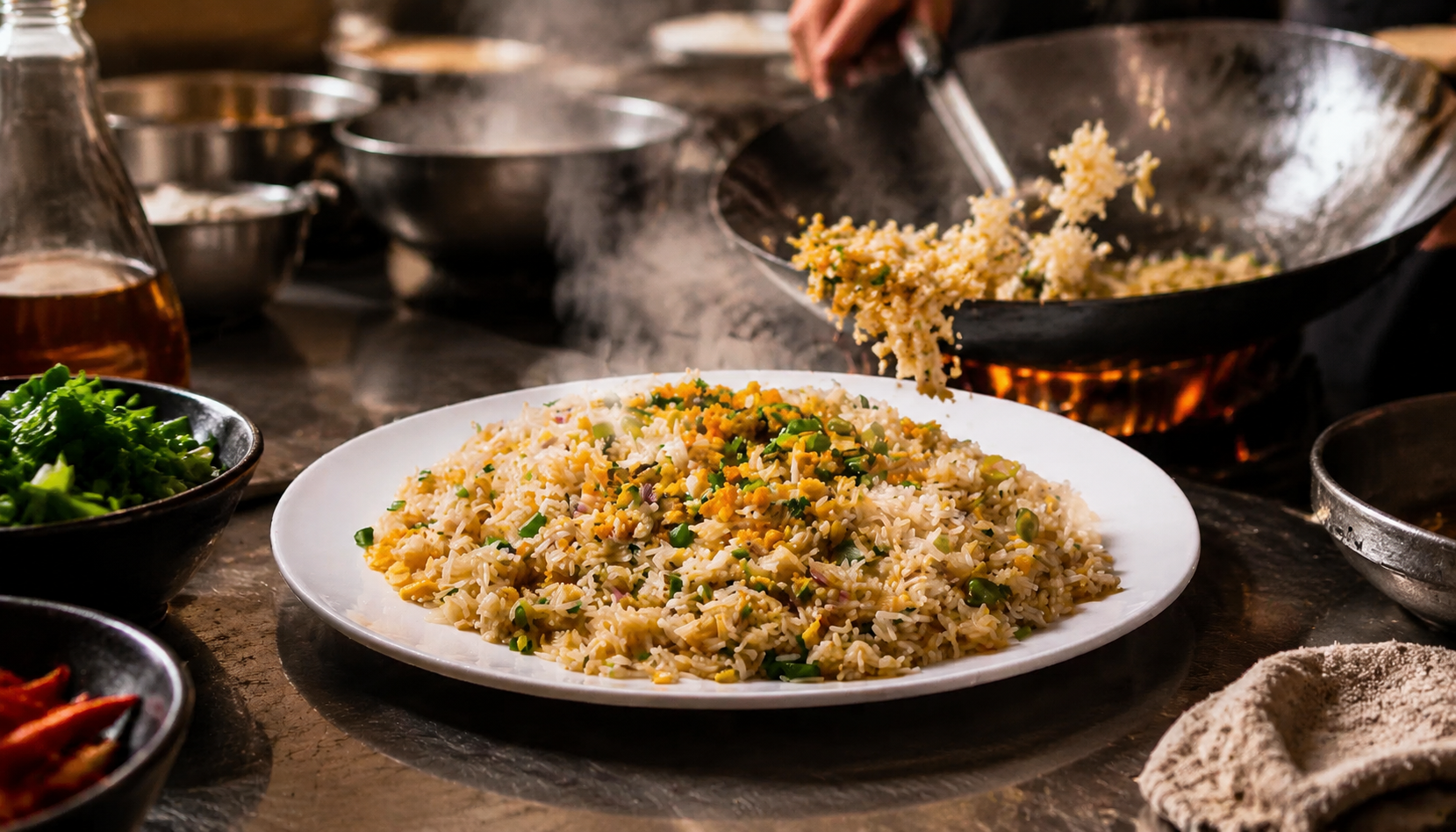
Have you ever had this experience? Eagerly preparing to make a plate of golden, tempting fried rice, only for the rice to clump together as soon as it hits the pan, impossible to separate with a spatula, ultimately turning into a sticky, mushy "stewed rice"? Don't be discouraged; it's likely not your technique that's lacking, but rather your choice of rice. Today, I'm going to talk to you about this kitchen marvel I recently discovered – Fried Rice Special Rice: Perfectly Separate Grains, Non-Stick, Premium Short-Grain Rice 0.5kg – and how I use it to make restaurant-quality golden fried rice.
Why does your fried rice always stick to the pan?
Regular rice, especially varieties with a soft and glutinous texture, has a relatively low amylose content and high amylopectin content. When cooked, the rice grains tend to stick together, resulting in a soft and glutinous texture, which is great for porridge or rice bowls. However, when this type of rice is stir-fried, moisture evaporates at high temperatures, and the starch gelatinizes, making it more prone to clumping and sticking to the pan. The Fried Rice Special Rice: Perfectly Separate Grains, Non-Stick, Premium Short-Grain Rice 0.5kg, on the other hand, solves this problem at its root. It selects short-grain rice with a higher amylose content. The cooked rice, even straight out of the pot, feels dry on the surface and has a strong granular texture. This lays a solid foundation for making perfectly separate fried rice.
I've used some rice varieties on the market that claim to be "fried rice special" before, but the results were always unsatisfactory. It wasn't until I tried this Niannianfeng Rice 500g Small Pack Rice for Dormitory Singles, Convenient for First Taste that I truly understood what "perfectly separate grains" means. If you frequently make fried rice or want to stock up, they also offer larger, more cost-effective packs like Nian Nian Feng Tri-color Fried Rice 10kg and Niannianfeng Fried Rice Special Rice 5KG Family Pack Non-Stick Grains Separate Restaurant Quality Aromatic Rice.
Fried Rice Special 0.5kg Short-Grain Rice: What's its 'secret weapon'?
The key to this rice achieving "perfectly separate grains and non-stick" lies in its varietal characteristics and processing technology. Short-grain rice typically has plump grains and a denser starch structure, allowing it to absorb water and expand evenly during cooking without easily breaking. I conducted a comparative experiment, cooking and then stir-frying ordinary Northeast rice and this Fried Rice Special Premium Short-Grain Rice 0.5kg separately. The results showed that even after overnight refrigeration, the ordinary rice still required repeated pressing with a spatula to break it apart during stir-frying, which was time-consuming and laborious. However, with the Fried Rice Special rice, a gentle flick of the spatula was enough for the grains to naturally separate, dancing in the pan and making that crisp "shasha" sound. Just by listening, you know this plate of fried rice is going to be perfect. If you want to delve deeper into how rice choice affects fried rice, you can check out this article: Mastering Fluffy, Non-Sticky Fried Rice: Why Your 0.5kg Rice Choice is Key to Perfect Grains.
Practical Demonstration: How to Make Golden Egg Fried Rice with It
Preparation:
1. Rice Preparation: Take 200g of Fried Rice Special Premium Short-Grain Rice 0.5kg, and cook it with a rice-to-water ratio of 1:1.1 (e.g., 200g rice with 220ml water). Why reduce the water? Because fried rice requires dry rice; too much moisture makes it sticky. Once cooked, immediately spread the rice evenly on a large plate, use chopsticks to loosen it, allow the steam to dissipate, and let it cool naturally for at least 2 hours, preferably refrigerated overnight. Why cool it down? When refrigerated, the starch in the rice retrogrades, becoming firmer and less prone to breaking, making it less likely to stick during stir-frying.
2. Egg Preparation: Take 2 eggs, beat them, add 1/4 teaspoon of salt and a pinch of white pepper, and whisk well. Why add salt and white pepper? Salt seasons the egg mixture in advance, and white pepper removes any eggy smell, making the egg flavor purer.
3. Ingredient Preparation: 2 tablespoons chopped green onions, 3 tablespoons diced ham or bacon (optional).
Stir-frying Steps:
Step One: Heat the Wok, Season, and Add Oil
Heat the wok until it smokes (about 200-220℃), pour in 1 tablespoon of cooking oil, swirl the wok to coat the sides evenly, then pour out any excess oil, leaving only a thin layer. Why hot wok, cold oil? High temperature creates an oil film on the wok's surface, effectively preventing sticking. Pouring out excess oil prevents the fried rice from becoming too greasy and ensures even heating of the rice grains.
Step Two: Quickly Scramble Eggs, Cook Until 70% Done
Reheat the residual oil in the wok, pour in the beaten eggs, and quickly scramble them with chopsticks or a spatula. Why stir-fry quickly? Egg liquid solidifies rapidly at high temperatures; quick scrambling creates fine egg curds. Remove immediately when 70% cooked and set aside. Why 70% cooked? This keeps the eggs tender and smooth. When later mixed with rice, they can absorb the rice's aroma, preventing them from becoming overcooked and dry.
Step Three: Add Rice to Wok, Stir-fry on High Heat
Add half a tablespoon of oil to the wok again, heat it, then add the cooled rice. Quickly stir-fry with a spatula, breaking up any clumps of rice. Why stir-fry on high heat? High temperature rapidly evaporates moisture from the rice surface, ensuring even heating and drying of the grains, thus achieving perfectly separate grains. I usually continue stir-frying for about 2 minutes until the rice grains dance in the wok, making a slight "shasha" sound.
Step Four: Add Eggs and Ingredients, Season
Add the previously scrambled eggs, chopped green onions, diced ham, and other ingredients to the wok, and mix and stir-fry with the rice. Add 1/2 teaspoon salt, 1/4 teaspoon chicken bouillon (optional), and a dash of light soy sauce, and continue stir-frying on high heat for 1 minute. Why add seasonings last? This ensures the seasonings evenly coat the rice grains, preventing localized saltiness while keeping the rice dry.
Common Pitfall for Beginners: Adding Rice to the Wok Before It's Fully Cooled
Many beginners, when making fried rice, often can't wait for the rice to cool completely, or even use hot rice straight from the cooker. This is the number one killer for sticky fried rice with a mushy texture! Hot rice has high moisture content and strong starch activity, making it prone to gelatinization and sticking when exposed to high temperatures. Solution: Be sure to cook the rice in advance, spread it out to cool completely, and ideally refrigerate it for at least 2 hours, or even overnight. This reduces the rice's moisture content and makes the grain structure firmer, preventing it from sticking during stir-frying. If you want to learn more tips on how this rice helps you say goodbye to sticky pans, you can refer to this article: Nian Nian Feng 0.5kg Rice for Fried Rice: Unlock Perfectly Separate Grains, Say Goodbye to Sticky Pans.
Serve and Taste: The Allure of Golden Fried Rice
When the rice grains in the wok are golden and emit an enticing aroma of egg and rice, you can turn off the heat and serve. Take a bite, and you'll find each grain of rice has a slight toasted aroma, dry on the outside yet perfectly chewy on the inside. The egg,